
Potential Pitfalls of Using AI for Marketing
Are you wondering how AI is changing marketing? AI is transforming marketing by helping brands work faster, reach the right people, and personalize messages better than ever. But it’s not all smooth sailing. Using AI means dealing with messy data, tough tech setups, privacy rules, and making sure marketing still feels human. Many marketers struggle with these issues, from high costs and a lack of skills to keeping creativity alive.
Knowing these challenges is key to using AI in a way that helps your brand grow without losing what makes it special. Let’s dive into the real pitfalls marketers face with AI and how to avoid them.
What are the common challenges marketers face when adopting AI?
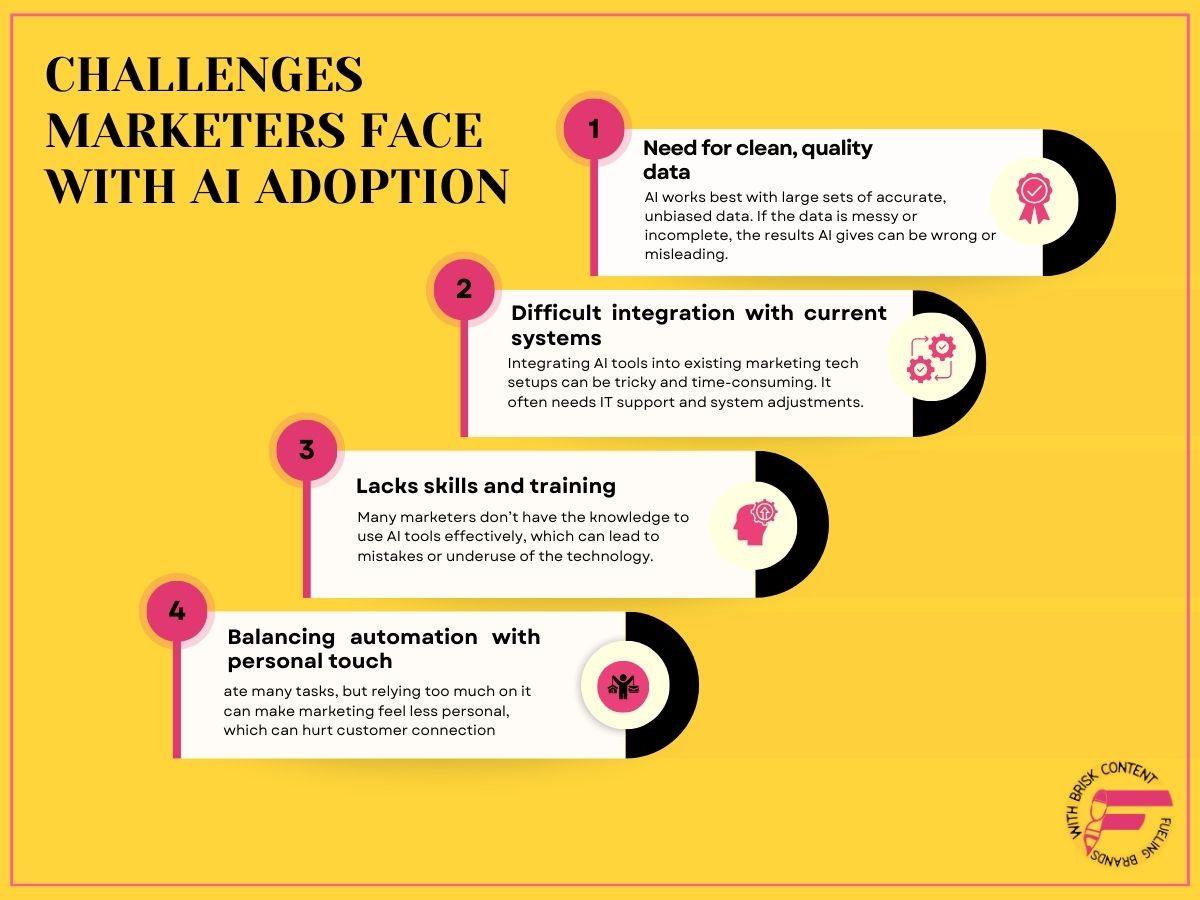
When marketers start using AI, they often face several key challenges that are important to know:
- Need for clean, quality data
AI works best with large sets of accurate, unbiased data. If the data is messy or incomplete, the results AI gives can be wrong or misleading.
- Difficult integration with current systems
Putting AI tools into existing marketing tech setups can be tricky and take a lot of time. It often needs IT support and system adjustments.
- Lack of skills and training
Many marketers don’t yet have the knowledge to use AI tools effectively, which can cause mistakes or underuse of the technology.
- Balancing automation with personal touch
AI can automate many tasks, but relying too much on it can make marketing feel less personal, which can hurt customer connection.
- Privacy and compliance concerns
Marketers must follow privacy laws and ethical guidelines when using AI, or they risk legal trouble and loss of customer trust.
- High costs and ongoing support
AI tools can be expensive to start using and require continuous maintenance, which can be difficult for smaller businesses to afford.
- Limited creativity and emotional understanding
AI lacks human creativity and can’t truly understand emotions, so it may not produce content that connects deeply with audiences.
How can AI lead to the loss of human touch in marketing campaigns?
AI can cause marketing to lose its human touch, mainly because it focuses on automation and data instead of real human feelings and understanding. Here’s why:
- Automated messages from AI often sound generic and robotic, not warm or personal.
- AI struggles to get human emotions right, so its content can miss the emotional connection that builds trust.
- Relying too much on data makes marketing feel impersonal, as it doesn’t always consider individual human stories.
- AI-driven campaigns can be predictable and lack the creative spark that humans bring.
- When chatbots and automated emails replace real people, customers miss out on genuine human interactions.
What risks does AI pose to brand voice and authenticity?
Here are the risks AI poses to brand voice and authenticity, broken down simply in subpoints with explanations:
- Generic content
AI often creates similar-sounding messages for many brands. This can make your brand’s unique voice fade and feel less special.
- Flat, emotionless tone
AI struggles to catch the feelings and subtleties behind words. So, marketing messages might come off as robotic or boring instead of warm and real.
- Inconsistent style
Without proper controls, AI can sometimes create content that doesn’t match your brand’s usual tone. This confuses customers about who you are.
- Too much automation
Relying heavily on AI can make marketing feel less personal. People want to connect with real, relatable brands—not just machines.
- Possible mistakes
AI-generated content can have errors or ideas that don’t fit your brand well. It needs human review to keep the message right.
How does data quality and bias affect AI marketing outcomes?
Data quality and bias have a big effect on how well AI works in marketing. If the data is messy, outdated, or missing important details, AI can give wrong or misleading results. This can make it hard to target the right customers and waste marketing time as well as money. It’s also possible for AI to repeat or even make worse biases in data that already has them. This is unfair and can hurt trust. So, having clean, accurate, and unbiased data is key to getting good results from AI in marketing.
What privacy and ethical concerns arise from using AI in marketing?
Here are the privacy and ethical concerns that come with using AI in marketing:
- Collecting personal data
AI collects a lot of customer info, so businesses must be careful to handle it responsibly and keep it safe. - Following privacy laws
Marketers need to follow rules like GDPR to make sure they’re using data legally and respecting customer rights. - Avoiding data breaches
If data isn’t protected well, it can be leaked or hacked, which hurts customer trust and damages brands. - Preventing bias and unfairness
AI systems can inherit biases from data, leading to unfair treatment of certain groups. This needs to be managed carefully. - Being transparent
Customers should know when AI is used in marketing and how their data is being handled to build trust. - Using data ethically
It’s important not to misuse data or manipulate customers in ways that feel invasive or dishonest.
Can over-reliance on AI tools harm marketing creativity?
If you depend too much on AI tools, it can sometimes hold back marketing creativity because AI tends to stick to the same patterns and data, making campaigns feel similar and expected. It lacks the fresh, unique and creative ideas that come from human imagination. But when used well, AI actually helps by taking care of boring tasks and giving marketers more time to get creative. It can even inspire new ideas and help tailor content quickly. So really, AI should team up with humans, letting marketers focus on big creative thinking and storytelling.
What legal issues should marketers consider when using AI content?
Here are some of the legal issues marketers need to be aware of while using AI content:
- First, copyright and ownership. It can be tough. AI content might not be legally owned until enough human creativity is involved, so you could lose exclusive rights.
- Next, plagiarism is a big risk. AI sometimes produces work too close to existing material, which could lead to lawsuits.
- Data privacy laws are another big one. You must follow rules about using personal info for AI training and marketing.
- Transparency is important too. Let your audience know when AI creates content so you don’t mislead them.
- Avoid false or exaggerated claims in AI-generated content because that can cause legal problems under advertising laws.
- You also need to carefully read and follow the terms of use for any AI tool or platform you use.
- Watch out for trademark risks—AI might accidentally use logos or branding that belong to others.
- Lastly, check for defamation or inaccurate statements in AI content before publishing to protect your reputation.
What strategies can marketers use to overcome the pitfalls of AI adoption?
Marketers can overcome the pitfalls of AI adoption by following some straightforward strategies.
- First, invest time in learning and training, so your team completely understands how to use AI tools properly.
- Always keep human creativity and judgment involved to balance AI’s automation with a personal touch.
- Use high-quality, unbiased data to feed AI systems for better results.
- Stay fair with customers about AI usage to build trust.
- Make sure to follow privacy laws and ethical guidelines carefully.
- Also, review AI-generated content before publishing to avoid mistakes.
- Finally, choose AI tools that fit your business needs and budget, and be patient as you adapt to the new technology.
- This way, you can get the best out of AI without losing what makes your marketing unique.
Conclusion
A.I. is quickly changing marketing by giving us tools that help us work better and connect with more people. All you have to make sure of is that the data is correct, that you protect privacy, that you deal with costs, and that you don’t miss the personal side of marketing. The winners will be the marketers who blend AI’s power with real creativity and fairness.
Smart technology and real ties with customers that keep them coming back are both things that brands can get if they learn new skills, choose the right tools, and use AI carefully. Contact ContentFayah today for expert content writing services that blend AI efficiency with creative storytelling. Get your free strategy consultation and ignite your marketing.
FAQs
Common pitfalls include poor data quality leading to bad results, loss of brand authenticity, privacy risks, high costs, and over-automation that feels robotic. Balancing AI with human creativity helps avoid these.
Always review AI outputs, add emotional storytelling, personalize beyond data, and use AI for routine tasks only. This keeps campaigns relatable and builds stronger customer connections.
Follow privacy laws like GDPR, disclose AI use, check for plagiarism and biases, ensure human edits for ownership, and review for false claims to stay compliant and trustworthy.