

10 Game-Changing Tips for Crafting Email Subject Lines That Work
Do you know the average email open rate across industries was about 35.63% in 2025? Which means one in three emails are opened, it is pretty much clear that your subject line is your main hero, on which it is decided whether your message gets noticed or not. Your subject line is the gateway to your message, so it is very important to craft it properly to boost engagement and help you improve email marketing success.
But what makes a subject line irresistible enough to click? Is it personalization, urgency, curiosity, or something else? In this blog, you are gonna discover 10 practical tips to write better subject lines. Whether you’re a marketer, a business owner, or simply trying to write better emails, these tips can help you get more people to open your messages. Let’s get started and make sure your subject lines truly catch your reader’s eye.
- Understand Your Audience and Their Preferences
A good subject line starts with knowing your audience. Ask yourself what their preferred tone is for engaging with them, and what typically captures their interest. Check your existing data, whether it is about browsing habits, past emails, or purchase details, and also use it to shape your message. When your audience sees something that feels personal, they are more likely to click.
- Keep It Short and Clear
Most people check their emails on phones where space is limited. Subject lines between 30 and 50 characters tend to perform best. Being direct about the email’s content helps readers decide quickly whether to open it. For example, “Your March Invoice is Ready” is clearer than “Important Invoice Information.”
- Use Action-Oriented Language
Your subject line can convince readers to open your email if it has a powerful verb. “Discover,” “Get,” “Unlock,” and “Join” are examples of words that pique interest and convey a sense of urgency. These action phrases give your email a sense of importance and let readers know that it contains something worthwhile. This easy tactic can significantly increase your open rates and increase the number of people who interact with your content.
- Personalize Your Subject Lines
A person’s name or other personal details can help increase open rates. People are more likely to open emails that feel directed at them. Just be careful not to overuse personalization, because it can come across as too much.
- Create a Sense of Urgency or Scarcity
Short deadlines make your email feel more urgent. A subject line such as “Only 2 Days Left” or “Last Chance to Save” tells readers they need to open it soon. Always be truthful about the offer; you will earn more trust that way. Such tactics boost open rates and conversions but should be used sparingly and honestly to avoid damaging credibility.
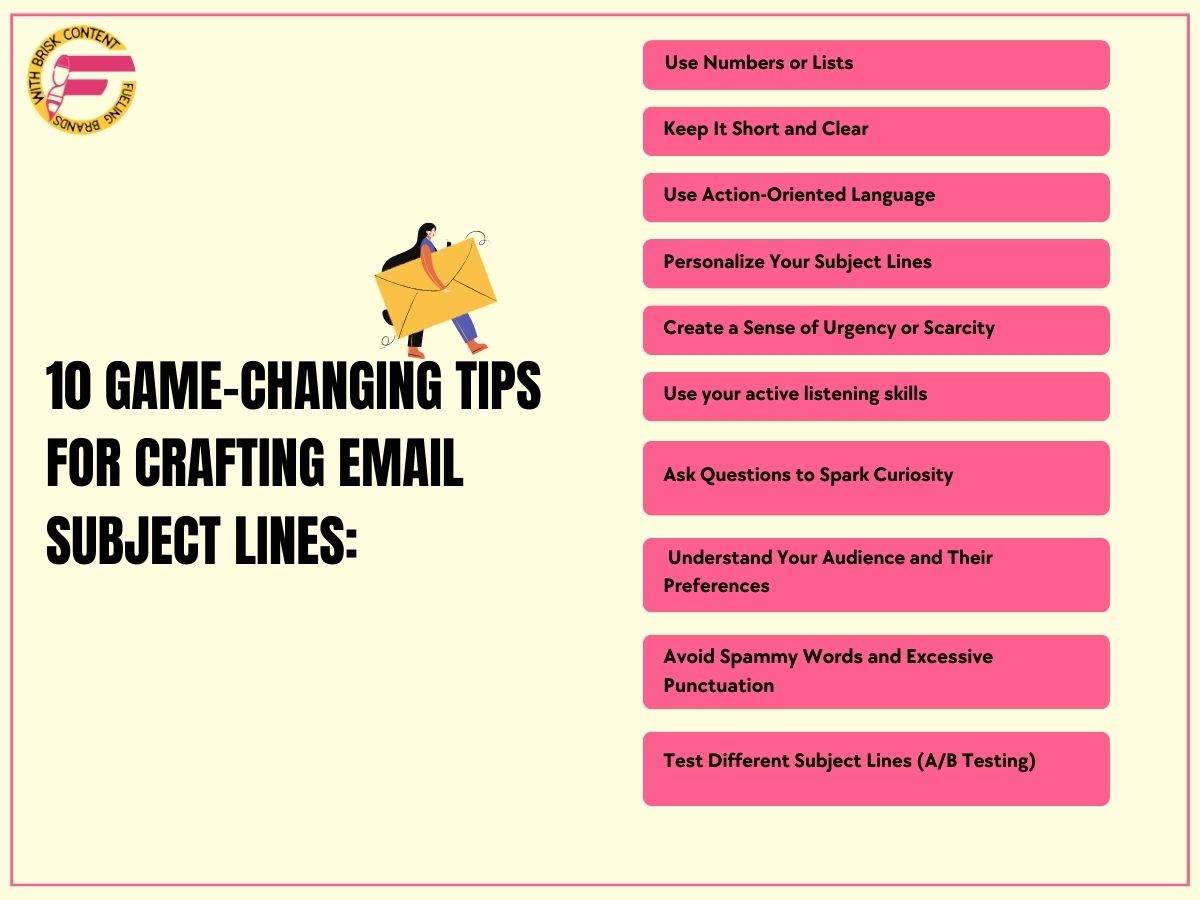
- Ask Questions to Spark Curiosity
Questions in subject lines spark curiosity and engage readers immediately. If you ask relevant questions like “Want to Save More?” or “Looking for Better Deals?”, ask recipients to answer. When questions clearly relate to the email content, they make the message more personal and compelling, which increases the chances of opens and interactions, especially when combined with a strong CTA inside.
- Avoid Spammy Words and Excessive Punctuation
Words like “FREE,” “Guarantee,” or multiple exclamation marks can set off spam filters or give the impression that you are unreliable. Remain sincere and professional. Avoid using ALL CAPS, which can come across as yelling, and use basic punctuation.
- Test Different Subject Lines (A/B Testing)
What attracts one group may not work for another. A/B testing can help you figure this out. You can try sending different subject lines to small segments of your audience and see which one gets more opens and clicks. Once you know the winner, send that version to the rest of your list. This simple step can make your email campaigns perform better using real, clear data.
- Use Numbers or Lists
Numbers grab attention and set clear expectations. Subject lines like “5 Secrets to Better Emails” or “3 Tips for Weekend Planning” show readers how much value they’ll get inside. These list-style examples, inspired by strategies like those in 17 Massive Content Marketing Examples to Boost Your Brand, make content easy to scan and promise actionable insights.
- Align Subject Lines With Your Email Content
Make sure your subject line accurately represents the email’s content. Misleading subject lines may get opens, but damage your brand’s trust long-term. Honor the reader’s time by being honest and clear about what’s inside.
Conclusion
Email subject lines can make a major difference in how well your campaign performs. A compelling subject line draws readers in, piques their interest, and demonstrates why your email is worthwhile. Your message is more likely to stand out in a busy inbox when you include components like personalization, urgency, or insightful inquiries. Just bear in mind to deliver on your promises; high-quality content fosters trust and maintains viewer engagement.
Testing different subject lines is also key. It helps you to continue developing your strategy by revealing what really resonates with your audience. Every phrase in the subject line counts because it is your first opportunity to attract attention and convince someone to read your email. Strong subject lines have the potential to boost open rates and foster enduring relationships when used effectively. Start using these tips today, and you’ll notice more people paying attention to your emails.
If you’re ready to take your subject lines to the next level, teams like Content Fayah specialize in email copywriting that blends these proven strategies with authentic storytelling. Start with their free subject line audit to see instant improvements.
FAQs
You should aim for 30-50 characters to ensure full visibility on mobile devices. Short, clear subject lines capture attention quickly.
Yes, but it should feel natural. Personalize when you have meaningful data like name or location. Avoid overdoing it to prevent looking spammy.
A/B testing reveals what resonates with your specific audience using real data. It optimizes campaigns by identifying winners, improving opens and clicks over time.