
What Is Thought Leadership Content?
Did you know that nearly 75% of executives have explored products or services they weren’t initially considering after engaging with quality thought leadership content? Thought leadership is now one of the most trusted ways to learn about a company’s expertise and value, far beyond traditional ads. It helps brands and experts share real knowledge and fresh ideas through posts, blogs, podcasts, or even books. This builds trust, opens new opportunities, and connects you with the right audience.
This blog will guide you through everything you need to know to successfully create and use thought leadership content to boost your brand and influence.
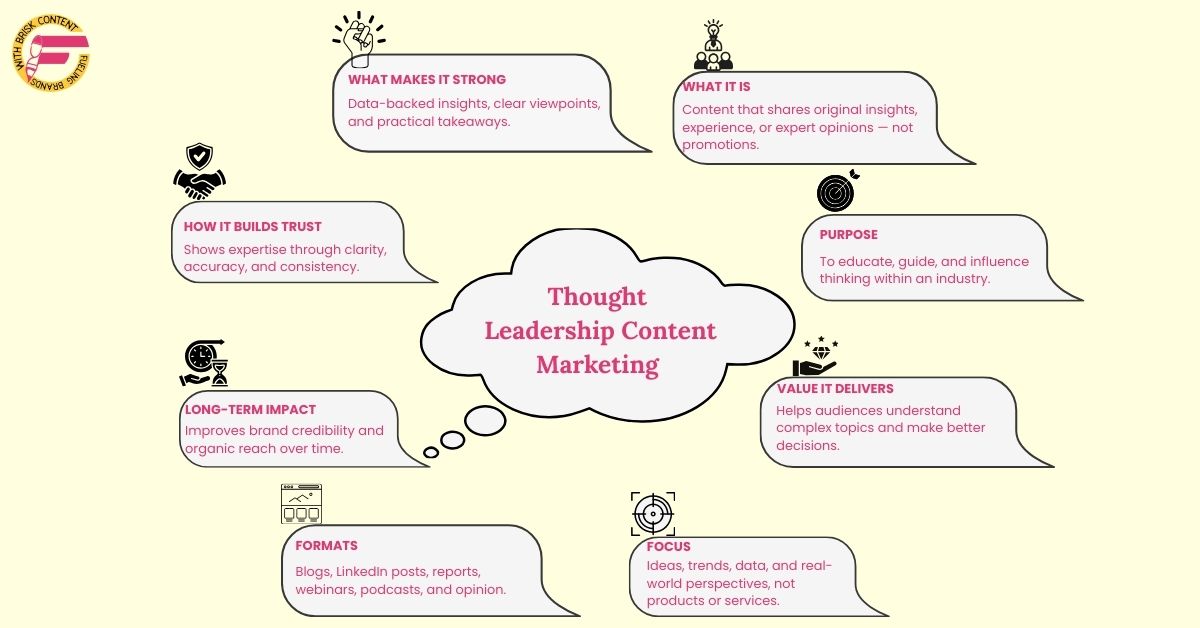
What Is Thought Leadership Content Marketing?
Thought leadership content marketing is when a brand shares useful, high-quality information from experts who really know their field. These experts, known as thought leaders, use formats like articles, infographics, videos, or social media posts to share their knowledge and help others learn something valuable. For brands, this type of content helps build trust, grow credibility, and strengthen their reputation in the industry.
7 types of thought leadership content
Sharing thought leadership content is one of the best ways to show your expertise and connect with your audience. Here are seven popular formats that top leaders use to share their ideas and make a real impact.
- LinkedIn/Twitter
LinkedIn is great for building your professional reputation and connecting with key decision-makers, like CEOs and business leaders. You can share useful industry info, post regularly, join conversations, and mix your own ideas with interesting articles. Twitter is faster and more casual, lets you share quick thoughts, join trending chats, and reach a wider group, including journalists and influencers. Using both together helps you get noticed, build trust, and grab more opportunities in different ways.
2. Newsletters and blogs
If you have more to say, start a blog or newsletter. These platforms let you share deeper insights and talk directly to your audience without dealing with social media algorithms. Email marketing also offers strong returns, so it’s worth the effort. The challenge is keeping your content engaging and growing your audience over time. This is where a content agency can help maintain quality and consistency.
3. Op-eds and bylines
If you publish your ideas in respected outlets like Forbes and The Wall Street Journal, it can greatly boost your visibility. A byline lets you speak directly to large audiences while strengthening your personal brand. The more people see your name next to well-known media brands, the more credible your expertise becomes. Partnering with professionals who know how to pitch to editors can help you get your ideas published.
4. Podcasts
Podcasts are booming, with hundreds of millions of listeners. Starting your own show or appearing as a guest helps share your expertise in an informal, conversation-style setting. It’s perfect for connecting with niche or engaged audiences. If you host your own, be patient and consistent; it takes a while to grow an audience. Joining existing podcasts, however, can quickly expand your reach.
5. Media interviews and profiles
Being featured in news articles or industry interviews can expose your ideas to much wider audiences , and it boosts trust, since earned media is often seen as more credible than ads. The trick is to stay on message and build good relationships with journalists. If you team up with an agency that already has media contacts, it’s much easier to get noticed and ensure your point of view comes through clearly.
6. Speeches and presentations
Speaking at events, webinars, or panels positions you as an expert to a ready audience. These opportunities help you create credibility and grow your professional network. Also, data reveals that the speaking gigs can bring a strong return on investment. People will want to hear more from you as you speak, creating a positive cycle of influence and recognition.
7. Books
Book publishing shows deep knowledge of your field and offers you an everlasting way to share your ideas. It’s more substantial than a post or an article, and it can even generate passive income. Books help build authority and connect you with decision-makers who respect well-thought-out, long-form ideas. Whether self-published or traditionally released, a book can be a powerful piece of your thought leadership strategy.
Thought Leadership Strategy!
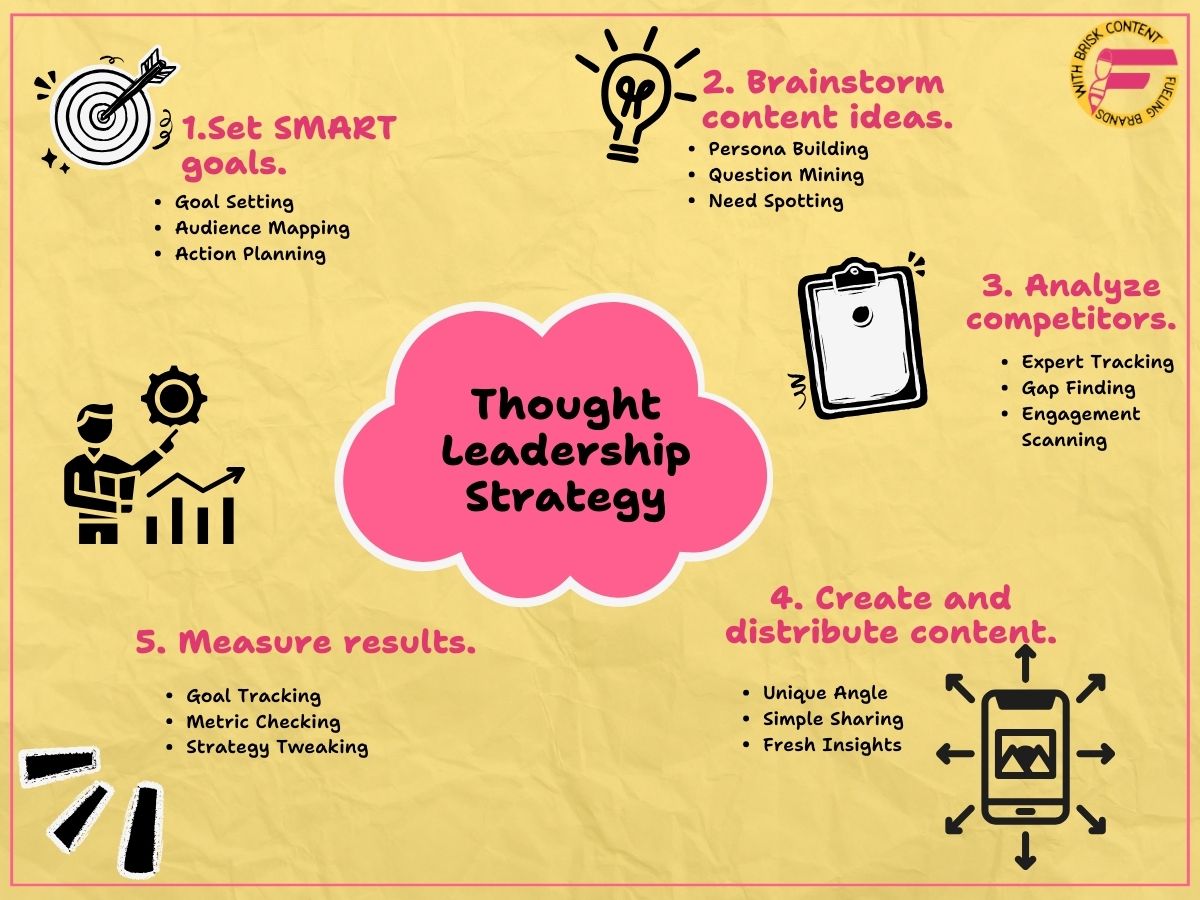
A thought leadership strategy is about building your reputation as an expert, not just pushing sales. It focuses on creating content that answers your audience’s important questions and shows your deep knowledge.
Step 1: Set SMART goals.
Break your big goal into smaller parts using SMART criteria, make your goals Specific, Measurable, Attainable, Relevant, and Timely. For example, aim to attract five new leads in three months. Then list the actions to reach that goal, like starting a blog or growing LinkedIn followers, prioritising what your audience prefers.
Step 2: Brainstorm content ideas.
Think about your audience personas and what they want to read or watch. Look for questions they ask on social media or forums like Reddit. Focus on creating content that meets their real needs.
Step 3: Analyze competitors.
Find out who your audience turns to now and what content they consume. Identify gaps where their needs aren’t met, and check which competitor posts get lots of likes or shares to inspire your ideas.
Step 4: Create and distribute content.
Make your content stand out by sharing your unique view and personality. Keep it easy to understand and share. Avoid copying popular content; instead, bring fresh insights so social media algorithms and readers notice you.
Step 5: Measure results.
Track how your content is doing based on the goals you set. Use relevant metrics to see if your strategy is bringing the impact you want and adjust as needed.
Why You Need Thought Leadership in Your Content Strategy
Thought leadership is important and a must-have in your content strategy because it helps your brand stand out by showing real expertise and building trust with your targeted audience. Instead of just selling, thought leadership focuses on providing valuable insights and answers that your audience is searching for, which forms deeper connections. Such type of content boosts your credibility, attracts new opportunities, and makes you stand out from competitors by positioning you as a go-to expert in your field. Using thought leadership can also help your brand’s image and, over time, make people more interested and loyal to it.
Final Thoughts
Think of thought leadership content like your trusted guide in a crowded marketplace. In 2025, 73% of decision-makers trust this kind of content more than traditional ads or brochures. They spend significant time digging into thoughtful articles and insights because they want real value, not sales talk.
But here’s the catch: 85% say a lot of content out there misses the mark by lacking fresh ideas or depth. So, it’s not about just pumping out posts; it’s about sharing smart, original ideas that answer real questions. When you nail this, you don’t just build credibility; you open doors to new opportunities and become a go-to expert that people want to engage with and do business with.ContentFayah helps brands master this exact balance through expert content writing that turns insights into influence. Schedule your free strategy call today and elevate your thought leadership game.
FAQs
Focus on sharing fresh ideas or new angles that others aren’t talking about. Original research or stories from real experiences really catch attention.
It’s best to involve experts or leaders in your company who truly understand the topics. Their insights make the content more reliable.
Consistency matters more than quantity. By posting regularly, even if small, you keep your audience engaged and help build your reputation over time.