
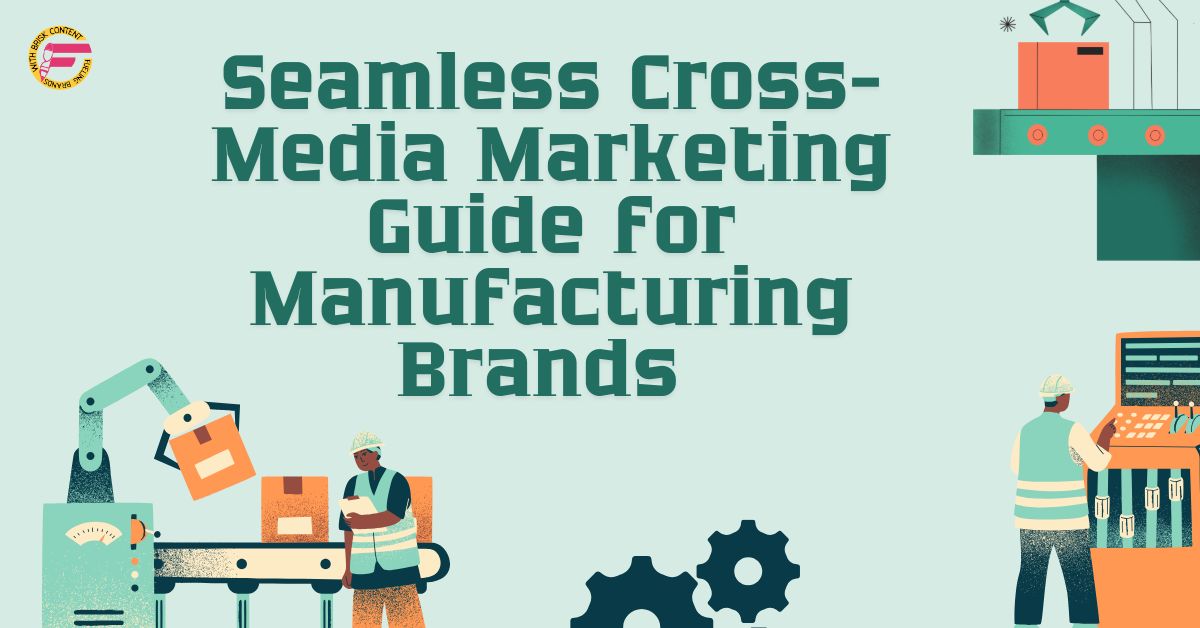
Seamless Cross-Media Marketing Guide for Manufacturing Brands
Your competitor just got a lead because their blog showed up on Google search results. Here’s why cross-media marketing is no longer optional for manufacturers.
It is high time that the manufacturing industry realizes that the days are gone when there were only a few manufacturers from whom a distributor or wholesaler could choose. With manufacturing industries mushrooming across the country under the Made in India initiative, competition in the sector has increased.
Traditional marketing and maintaining just a website is no longer enough for manufacturers. They have to learn to leverage more than a few marketing channels and content formats to build authority and reach as many customers as possible. Research shows that companies that leverage cross-media marketing see up to a 89% higher customer retention and 14% more sales.
This blog explores how a manufacturing brand can create successful cross-media marketing and stay ahead of the competition. It dives into the sea of multiple media available to manufacturers to create awareness, generate leads, and drive conversions. It also provides a framework for building an efficient and effective cross-media marketing strategy for manufacturers.
Why do Manufacturers need a Specialized Marketing Strategy?
Let’s first understand why manufacturers need a special marketing strategy. Marketing strategy for manufacturers differs from that of other businesses because they often deal in complex technical products that require specialized knowledge. This makes them liable to publish content that highlights their specialization and expertise in the field.
Also, the market size is comparatively small as they serve a specific segment with unique needs. So mass advertising will not help them as much as targeted marketing.
Furthermore, the manufacturing industry has a longer decision-making cycle because multiple stakeholders are involved in decision-making, given the high value of the goods. Therefore, their buying journey varies from other businesses and must be catered to accordingly.
These features of the manufacturing business demand specialized marketing content and strategy
Why do Manufacturers need Cross-Media Marketing?
With increasing competition, buyers want to choose the brand that best meets their specifications. Therefore, before approaching the brand directly, they conduct thorough research into what each brand offers. For instance, after watching your brand’s advertisement on LinkedIn or Instagram, they might search for your website online. They will review your online content, such as blogs, case studies, or white papers, if any, to assess your expertise. They will then read the customer reviews on Google before finally contacting you.
Thus, Cross-Media marketing ensures:
- Your presence is felt across all major platforms, thus improving visibility and credibility
- You reach more buyers
- Brand awareness is reinforced with repeated touchpoints
- Every stage of the buyer’s journey, from awareness to consideration, is catered to through different channels
- Higher ROI
Tata Steel is a leading example of a manufacturing brand successfully leveraging cross-media marketing. From publishing blogs and case studies on websites and LinkedIn to posting product demonstrations and behind-the-scenes on YouTube. And from maintaining strong presences at trade expos to advertising their sustainability initiative on TV, they have made their presence felt on all major media platforms and have established themselves as a trusted authority in the steel industry.
Key Platform that Works for Manufacturing Brands
Even though manufacturers have a comparatively small market size and don’t need to be everywhere, they must make their presence felt on all major media platforms where buyers can be. Let’s have a look at platforms that no manufacturer should ignore to get a competitive advantage.
- LinkedIn
LinkedIn is the top B2B platform for lead generation, with around 77% of B2B marketers using it as a primary channel. - Google & paid search
Buyers type product and problem keywords into Google daily. When done right, Google Ads can turn a near‑zero‑lead website into a steady pipeline of qualified leads. - Email marketing
Email remains a direct line to your existing contacts and prospects. It is perfect for nurturing long‑cycle manufacturing sales with technical content, case studies, and personalized offers. - Social media (Facebook, Instagram, industry portals)
While whitepapers and technical blogs build trust, social content (especially short videos and reels) makes your brand more approachable. - Podcasts are a powerful medium for establishing thought leadership, especially in industrial niches.
- Trade shows and OOH: In addition to digital media, manufacturers also need to make their presence felt in physical space. Trade shows and business expos provide a great opportunity to meet and interact with buyers who are genuinely interested in your products. Your presence in these events will build credibility and allow you to meet customers and make an impression by explaining your complete scope of business and how you can help them grow. And collect their business card to nurture them with proper content through email further.
Out-of-home (OOH) advertising, such as billboards, will provide constant exposure to a large local population.
Effective Content for Manufacturers for Lead Generation Across Media
About 76% of businesses, including those in the industrial and manufacturing sectors, report that content marketing boosts lead generation and demand. Manufacturing brands that keep their websites updated with useful content see an average visitor-to-lead conversion of about 5 to 8 percent and an overall conversion rate of 4.6 percent.
A U.S industrial plating company partnered with a marketing agency to rebuild its website, optimize SEO and launch Google Ads. Within one year, it generated $1 million in additional revenue and grew its inbound pipeline from 0 to 100s of qualified leads. This is the power of good quality content.
Effective cross-media content for the manufacturer across the buyer’s journey:
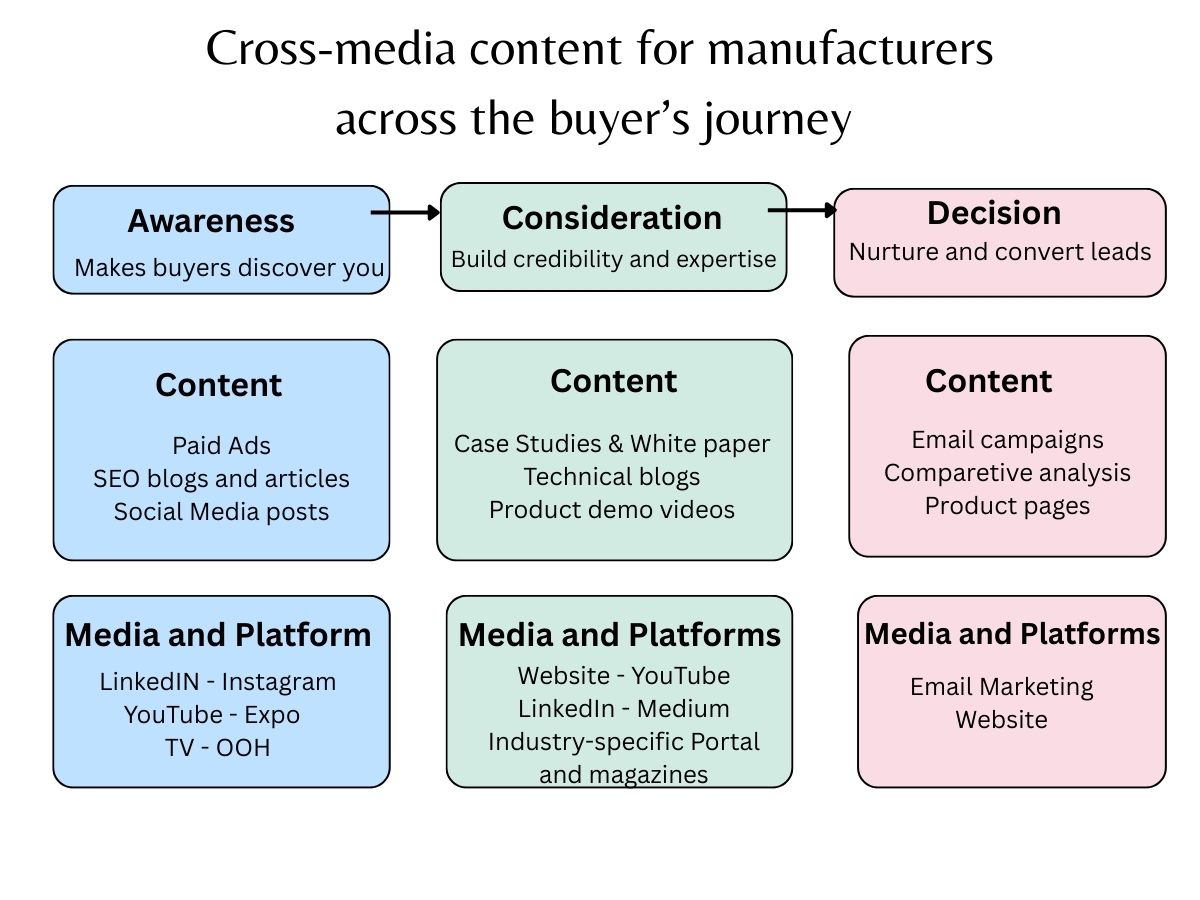
Awareness Stage
This type of content will help the prospective buyers to find your brand and create awareness of the products and services you have to offer
- Paid advertisements on Google search, LinkedIn, Instagram and YouTube
- SEO content like blogs, posts and articles on websites and LinkedIn
Consideration Stage
Through this content, you aim to establish your credibility in the market. The content at this stage should reflect your authority and expertise in your field. This is the lead generation stage.
- Case studies, whitepapers and technical blogs on websites and other platforms like Reddit, LinkedIn and Medium
- Presence on industry-specific portals and Magazines
- Video of product demonstration on YouTube
Decision Stage
Leads generated in the early stages should be further nurtured so they are sure they are making the right decision by choosing you over your competitors. To learn more about this stage, read our blog on ‘What is BOFU?’
- Email Nurturing
- Comparative Analysis with other available brands
- High Quality Product Pages
A Framework to build a seamless cross-media campaign
- Map your buyers: Identify who you want to target, on which platforms you will find them, and what content format will help them through the buyer’s journey.
- Set clear goals for each platform: Define what you want to achieve by leveraging each platform. For instance: LinkedIn for thought leadership and brand building, Google Ads to capture high-interest buyers searching for the same or similar products and Email to nurture leads through a long sales cycle.
- Keep your brand voice consistent: While adapting formats to the platforms, keep your tone, values, and key message consistent.
- Track and Improve: Define performance indicators for each platform and track the key metric using analytical tools. Understand the reports and improvise accordingly.
- Interlink the platforms: Provide links to your blogs in emails, or offer trade show visitors a code to unlock a white paper for free. This will create a loop to help your content reach buyers in multiple ways.
FAQ’s
Multichannel marketing simply means being present on multiple platforms. Cross-media marketing goes a step further — it ensures all those platforms are connected and working together as one seamless experience. For example, a buyer sees your LinkedIn post, visits your website blog, receives a follow-up email, and finally converts — that entire journey is planned and interlinked. That is cross-media marketing.
Not necessarily. You don’t need to be everywhere — you need to be where your buyers are. Start with 2-3 platforms that are most relevant to your industry. For most manufacturers, LinkedIn + Google + Email is the strongest starting combination. Once you build consistency there, you can gradually expand to other platforms like YouTube or industry portals.
Cross-media marketing is a long-term strategy, not a quick fix. Given the longer decision-making cycle in manufacturing, you can typically expect:
1-3 months — improved visibility and brand awareness
3-6 months — increase in website traffic and lead inquiries
6-12 months — measurable growth in qualified leads and conversions
Paid ads on Google and LinkedIn can show faster results, while SEO and content marketing build momentum over time.
Conclusion
Manufacturers can create an unfaltering strategy to reach as many buyers as possible by developing a multi-platform content marketing plan. Start by mapping the buyer’s journey and creating specific content for multiple platforms according to the buyer’s needs.
The next step is to interlink the cross‑media campaign, connecting search, social, email, and offline events into a seamless experience that repeatedly guides buyers into your sales funnel.
Let Content Fayah craft high‑impact, SEO‑friendly content across LinkedIn, Google, email, and your website.
Call Content Fayah today and turn your manufacturing brand’s expertise into a steady flow of qualified leads.