

10 B2B Content Marketing Examples That Will Inspire You
Most B2B buyers are no longer convinced by sales pitches alone. They want useful content that helps them make smarter decisions. According to 6sense’s Buyer Experience Report, B2B buyers complete nearly 70–80% of their purchase journey before ever speaking to a salesperson, and 81% have already chosen a preferred vendor by the time they first contact a salesperson. Your content isn’t just marketing. It’s your actual sales pitch
In this blog, we’ll look at real B2B content marketing examples from leading brands and break down what you can learn from them to improve your own strategy and results.
What is B2B Content Marketing?
B2B content marketing entails creating and distributing relevant content to engage business buyers. Unlike B2C content marketing, which focuses on individual consumers, B2C content marketing targets educating and building relationships with other businesses.
This approach leverages content types such as blogs, ebooks, case studies, and webinars to address the unique needs and challenges of a B2B audience.
Examples of B2B Content Marketing!
Example 1: Hubspot
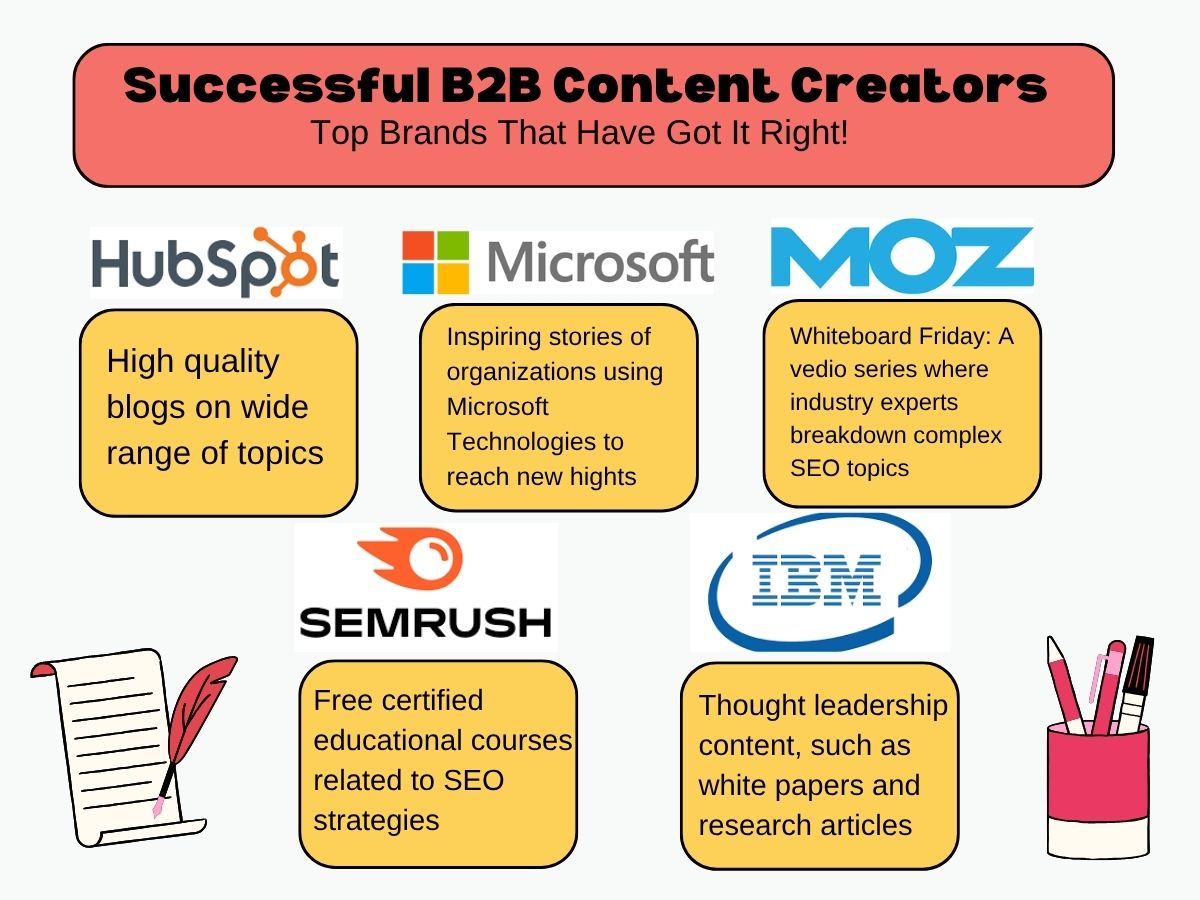
HubSpot has established itself as a reliable resource for marketers by consistently publishing high-quality blog content on a wide range of topics, from SEO techniques to sales strategies. Its educational articles empower businesses to enhance their marketing performance, attract more website visitors, and convert leads effectively.
Example 2: Semrush
The visibility management SaaS platform Semrush offers free educational courses to help users learn and apply effective SEO strategies. This B2B content marketing approach demonstrates how customers can use its tools while showcasing the value it provides to potential clients. To make the experience more engaging, Semrush rewards learners with certificates upon passing an exam.
Example 3: Shopify
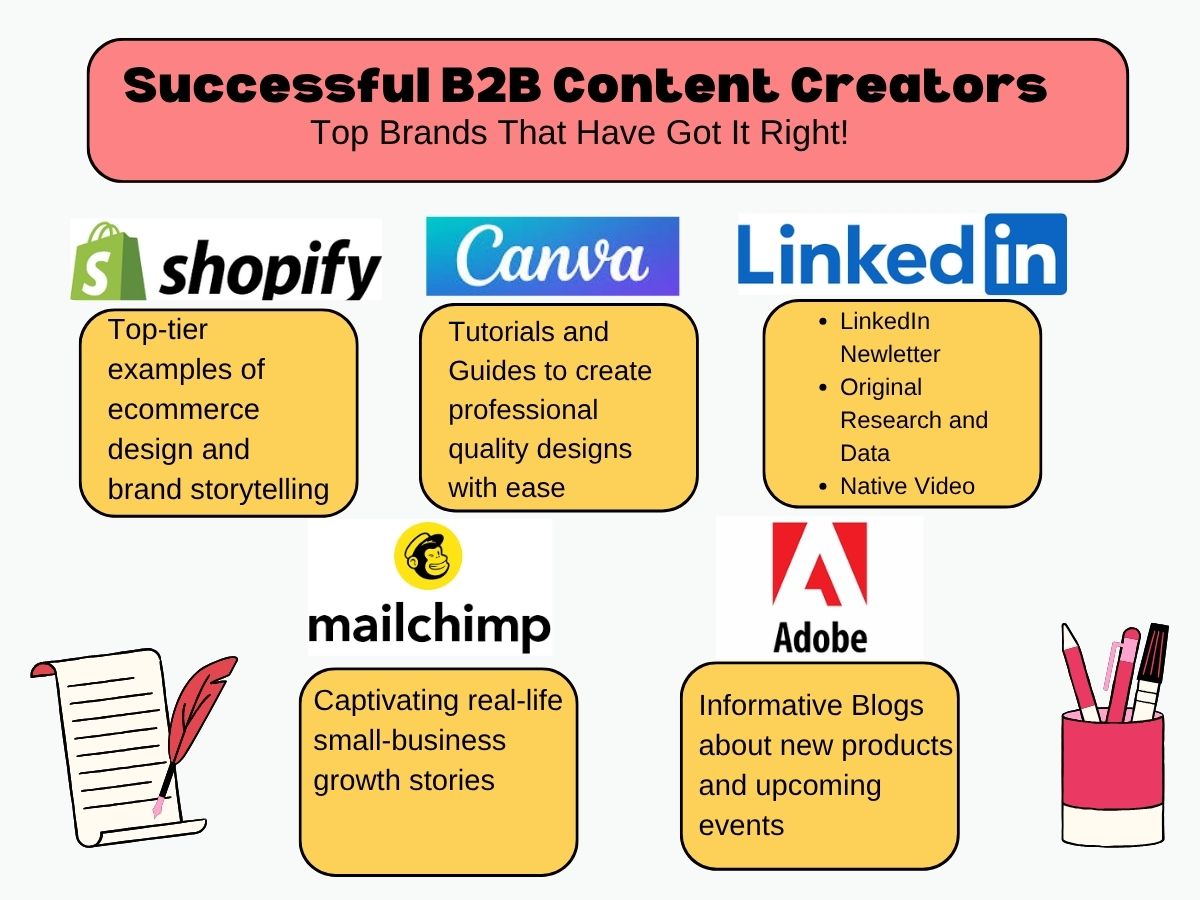
Shopify, a leading Canadian e-commerce platform, provides a large range of services that enable online retailers to create stores, manage sales, process payments, handle shipping, and market to customers. The company benefits from diverse content formats such as blogs, videos, podcasts, online courses, how-to guides, and a user forum to support every stage of its marketing funnel. By improving this content for relevant keywords, Shopify improves its search rankings and generates more traffic to its website.
Example 4: Mailchimp
Mailchimp connects with its audience through captivating and informative content. Sharing insightful stories about marketing and small-business growth helps the brand grab attention and strengthen its reputation as an expert resource in the industry. To learn how to write impactful case studies, read our blog on How to create B2B case studies.
Example 5: Canva
Canva, a popular graphic design platform, helps users create visually compelling social media posts, presentations, and marketing materials. The brand exemplifies effective B2B content marketing by applying the same principles it teaches using appealing visuals, clear messaging, and clean design to engage its audience.
Through blogs, tutorials, guides, and events, Canva focuses on conveying a seamless user experience while showcasing its core value. This consistent, customer-centered approach has made Canva a trusted resource and a strong voice in the design industry.
Example 6: Adobe
Adobe is a strong example of effective B2B content marketing, especially for brands aiming to engage a diverse, creative, and global audience. The company shares a wide variety of content, from inspiring customer stories, such as an artist using creativity to process grief, to filmmakers producing a movie with Adobe Creative Cloud.
It also publishes informative blogs about new products and upcoming events. Adobe’s content consistently educates, motivates, and empowers both its prospects and existing users.
Example 7: Microsoft
Microsoft’s Stories series stands out as a powerful example of B2B content marketing. It throws light on the people and organizations using Microsoft technologies to achieve goals. From students designing robots for social good to innovators using AI to tackle global problems, each story reveals how Microsoft solutions help drive meaningful change.
By showing how its technology helps people in real life, Microsoft makes it a tool for progress instead of just another product.
Example 8: IBM’s Thought Leadership Strategy
IBM uses thought-leadership content, such as white papers, research reports, and expert articles, to spotlight its technology innovations and expertise. This strategy helps the company earn trust, build credibility, and strengthen its reputation as a leader in the industry.
Example 9: Moz
Moz is an SEO platform and digital marketing toolset designed to help businesses increase their online visibility. The company connects with its audience through its popular educational video series, Whiteboard Friday. Presented in a friendly and approachable style, these videos feature industry experts who share insights on SEO trends, strategies, and best practices.
Covering topics from new search trends to effective content planning, the series positions Moz as a trusted thought leader while promoting its range of services.
Example 10: LinkedIn B2B Institute
The LinkedIn B2B Institute is a research center that explores new ways to drive B2B growth. It regularly shares content on marketing trends and best practices to help businesses enhance their marketing, attract more valuable website traffic, and generate quality leads. In doing so, it also strengthens LinkedIn’s brand as a go-to platform for B2B marketers looking to stay ahead of the competition.
The B2B Video Shift
If you think video is only for B2C brands, the numbers say otherwise. 58% of B2B marketers consider video marketing as an effective content type, and 37% are actively increasing their video budgets in 2026.
Today’s B2B buyer uses video at every stage of the purchase journey. From short-form LinkedIn videos for discovery, to in-depth explainer videos and webinars before making a final decision. In fact, video has become one of the most effective formats for reducing buyer hesitation and building trust.
Moz has understood this for years. Their Whiteboard Friday series consistently turns complex SEO topics into accessible, engaging videos that educate their audience. Shopify leverages a full mix of video formats, including tutorials, how-to guides, and founder stories, to support every stage of its marketing funnel.
The message is clear: video is the format your buyers are actively seeking out. Whether it’s a 60-second LinkedIn clip or a 20-minute deep-dive webinar, showing up on video instantly builds trust.
Combine AI Speed with Human Depth to Rise Above the Noise
The rise of AI has completely changed how B2B brands create and distribute content. According to recent data, 85% of B2B marketers now rely on AI tools for content creation. Using AI tools to brainstorm ideas, summarize research, and draft content at scale.
But as AI makes content creation faster, the internet is flooded with generic posts that all sound the same. This is why the top brands bet on what AI cannot replicate: original research, first-hand expertise, and real customer stories.
Brands like IBM are already ahead of this curve. Their white papers, research reports, and expert-driven articles are built on genuine insight and credibility. Adobe takes a similar approach by sharing real customer stories that inspire and educate, giving their content a human depth.
So, the final takeaway for your B2B content is to use AI to work smarter, but invest in experience-led content to stand out. Buyers can tell the difference, and so can Google
To learn more about effective B2B marketing stratergies read our blog on 7 content hacks for successful B2B marketing.
Conclusion
The best B2B content marketing examples prove that real success comes from consistently delivering useful, engaging content. When brands share educational resources, real stories, and practical insights, they build trust and long-term relationships. By taking inspiration from these leading companies, you can shape a content strategy that strengthens your brand, attracts quality leads, and supports sustainable business growth. Visit Content Fayah to start building a powerful content marketing strategy customized to your business goals today.
B2B content marketing involves creating and sharing valuable content to attract and engage other businesses, build trust, and drive sales or partnerships.
It helps companies establish authority, nurture leads, and create significant relationships with their target businesses, leading to long-term growth.
Blogs, white papers, case studies, videos, webinars, and podcasts are some of the most effective formats for B2B content marketing.
Start by understanding your audience, setting clear goals, choosing the right content formats, and focusing on consistency and value. Learn from examples set by top B2B content marketing brands such as HubSpot and LinkedIn.