

Crafting Content Briefs: How to Customize for Every Format
Did you know that content marketing generates over 3 times as many leads as outbound marketing tactics, and guess what: it’s 62% less expensive. Only 89% of marketers with strategic planning (like detailed content briefs) actively use it to drive demand. Imagine you are spinning your wheels on blogs, videos, and emails that collapse because they are not dialed in to each format, wasting time and resulting in zero conversions. Sound familiar? That’s where the content brief, your behind-the-scenes hero, turns chaos into content gold.
In this blog, we will unpack what a content brief is, reveal a content brief template, and walk through how to write a content brief, from content brief primary keyword research and competing URLs content analysis to crafting a flawless content brief structure. Learn to customize content brief formats, grab content brief examples, and amp up your content brief SEO. Time to craft content that converts.
What Is a Content Brief?
A content brief is your roadmap for creating content that beats the mark every time. You can think of it as a fraud sheet that aligns your team’s vision with audience needs and SEO goals. Unlike an uncertain outline, it details everything from content briefs and primary keywords to tone, structure, and calls to action, ensuring consistency across formats such as blogs, videos, and infographics.
It saves hours of revision time by front-loading research, making it easy to customize content brief formats for any channel. Whether you’re a solo creator or leading a team, a strong foundation in content briefs turns chaotic ideas into polished, high-performing pieces that rank and convert.
What to Include in a Content Brief?
A solid content brief template includes essential pieces that steer writers while leaving room for their creative spark. Start with your content brief primary keyword and secondary keywords for SEO focus as detailed in The Ultimate Guide to Content Marketing in 2025. Add a reader profile (pain points, demographics), content brief structure outline (H2s, bullet points), estimated word count, and tone guidelines.
Include competing URLs’ content analysis perceptions, unique angles from original research or expert interviews, and CTAs. Visuals, such as suggested images or data charts, round it out. This checklist makes sure your brief is comprehensive, adaptable, and ready to create content brief magic across formats.
How to Write a Content Brief?
A content brief follows a simple step-by-step process. Start with primary keyword research (Ahrefs/SEMrush for volume/intent). Add secondary keywords. Analyze top-competing URLs for gaps. Set word count by format (2,000+ blogs). Build a reader profile, add original research or expert interviews, then craft a suggested structure with headings/FAQs. Follow this how-to write a content brief path for SEO wins and reader love.
- Research the Primary Keyword
Start with your main keyword, the star of your brief. Use tools to check search volume, difficulty, and intent (like informational or buying-focused). Select terms with strong traffic but low competition, such as “content brief template.” This sets up your content brief SEO from the start.
- Identify Relevant Secondary Keywords
Support your star with 5-10 secondary keywords, such as “content brief example” or “customize content brief formats.” These expand coverage, boost topical authority, and capture related searches without keyword stuffing.
- Analyze the Top-Competing URLs
Check the top 10 ranking pages: their length, layout, and links. Spot gaps like missing data or weak visuals, then plan to beat them. This gives you a clear advantage.
- Calculate the Estimated Word Count
Fit the length to your format and competitors: 1,500-3,000 words for blog posts, shorter for social posts. Add more depth for guides. It keeps content full while remaining easy to read.
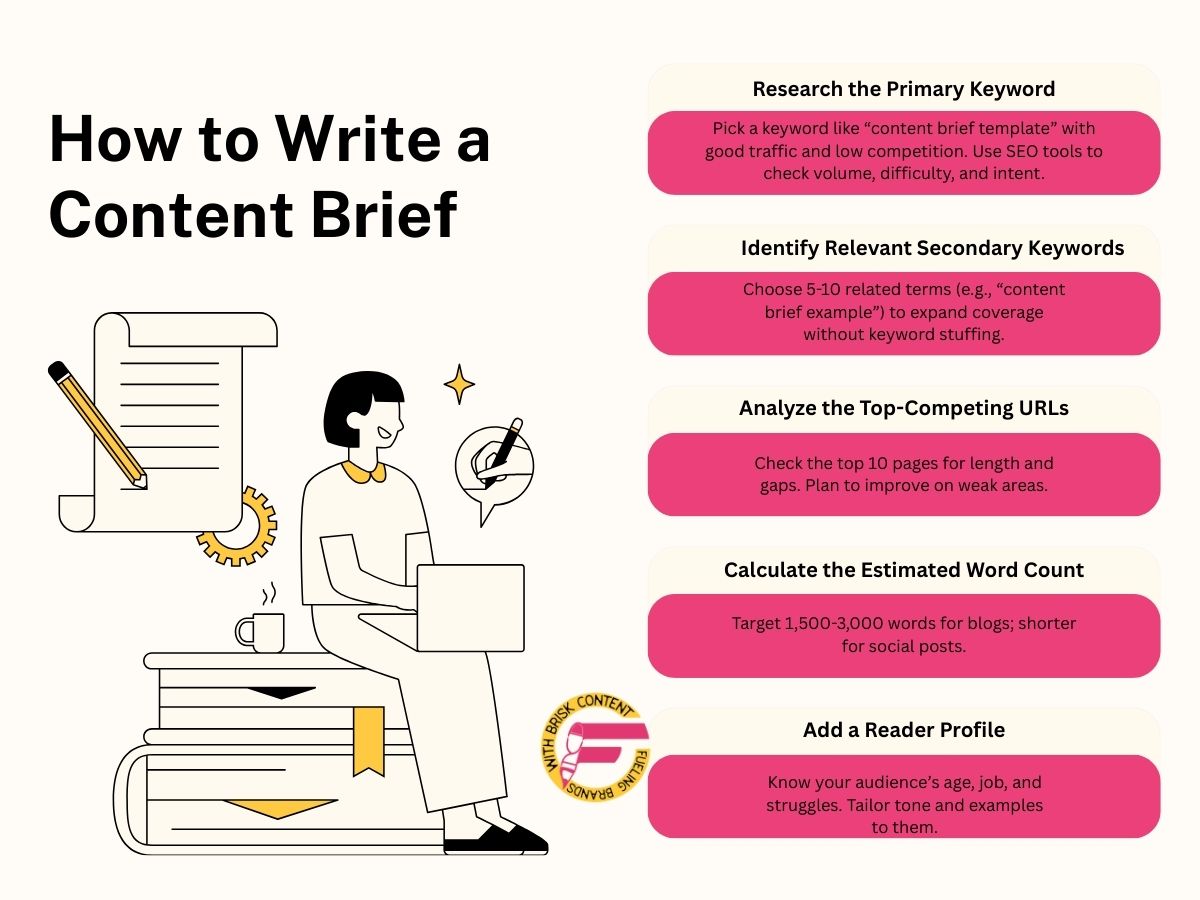
- Add a Reader Profile
Paint a vivid picture: Age, job, challenges (e.g., “Busy marketer struggling with SEO”). Tailor tone and examples to them for deeper resonance and higher engagement.
- Perform Original Research
Just don’t go through Google survey readers, crunch fresh stats, or test tools. This adds credibility and shareability, setting your content apart in content brief SEO.
- Interview In-House Experts
Talk to your team for real insights. Quotes and stats from SMEs make your brief authoritative and authentic.
- Create a Suggested Structure
Outline H1-H3s, intros, lists, and CTAs. Suggest transitions and FAQs for the flow. A sound content brief structure makes writing effortless.
3 Effective Content Brief Examples (+ Why They Work)
Have you ever wondered how top brands create content that ranks well and keeps readers hooked? Real examples show the way. Backlinko adds solid data and smart keywords to drive significant traffic. Relato creates short-story-style email briefs that achieve very high open rates. Beam makes video briefs with clear timings and attractive visuals for short, fast clips. They do well because they combine SEO skills, audience understanding, and the right content format, much like the B2B hacks in 7 Content Hacks for a Successful B2B Marketing. Use their approach to strengthen your content.
Example 1: Backlinko
Backlinko’s briefs are SEO stars. They check top pages, add charts, and break things into steps. This lands them #1 by filling gaps others skip.
Example 2: Relato
Relato does great story briefs for emails and social posts. They hook readers with simple flows. Result? Lots of likes and shares, without pushy sales.
Example 3: Beam
Beam’s video briefs outline hooks within the first 5 seconds, additional clips, and next steps. Built for YouTube, they grow watch time and fans fast.
Conclusion
Content briefs are your shortcut to blogs, videos, and emails that hit home every time. They line up the best keywords, map out reader needs, and sketch a clear path so nothing falls through the cracks. Simple steps like identifying top pages and fresh ideas help everyone move faster with fewer changes. Top brands like Backlinko prove that strong briefs mean more visitors and real impact. Pick up a basic template today, adjust it for your style, and see your content climb charts while pulling in loyal fans. No more wasted effort; just smart, steady wins. Ready to try? Contact Content Fayah now to build your first brief and share your results in the comments. We love to hear how it goes.
FAQs
A content brief is a short guide with keywords, reader information, and structure to make content easier and more effective.
To write a content brief, you need to research keywords, check rivals, add a reader profile, and outline the structure step by step.
It keeps teams aligned, boosts SEO, and cuts revisions to deliver better results faster.